Interview with Professor Yibing WANG
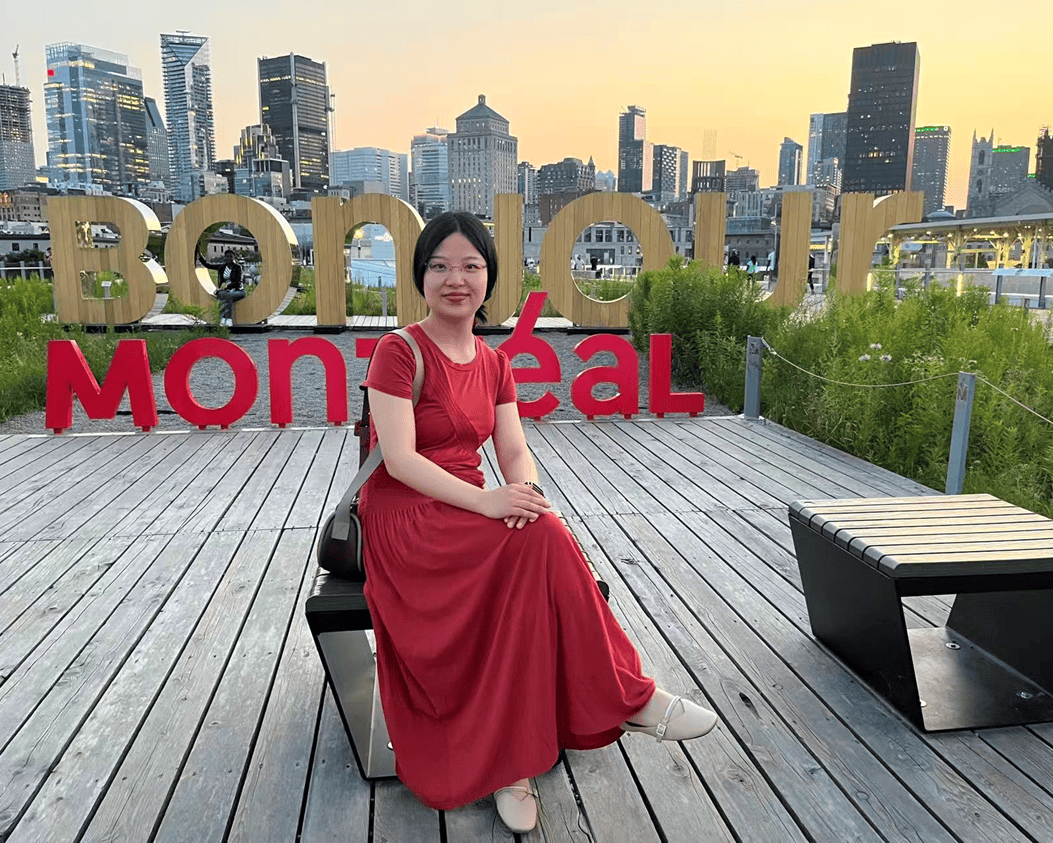
My name is Yibing Wang, and I am a faculty member in the Department of Economics at the International Business School of Chongqing Technology and Business University (CTBU) in China. I studied at the same institution and have been teaching there for more than ten years. I earned my Bachelor’s degree in Money and Finance from the University of Toulouse in France, then continued my studies at Paris Nanterre University, where I completed a Master’s degree in Asset Management. My research focuses on applied economics, and I currently teach courses such as “Calculus” and “Statistics.”
I am deeply convinced that the essence of education lies in “lighting one fire with another”—in other words, inspiring intrinsic motivation and a passion for exploration in students. Outside the classroom, I thrive on culinary creativity and recharge by spending time in nature through outdoor activities. These passions continually bring renewed energy to my teaching and research.
Interview
- In your opinion, what are the main linguistic and cultural benefits for Chinese students participating in the Business French Summer School at HEC Montréal?
By taking part in this program, Chinese students have not only significantly improved their practical French skills—particularly in the integrated use of listening, speaking, reading, and writing in business contexts—but also experienced cultural immersion in the social atmosphere and business culture of Quebec, the French-speaking province of Canada. They gradually gained an understanding of local business customs and values, broadening their international outlook and strengthening their confidence in intercultural communication.
What impressed me most was the richness of the experiential learning opportunities offered by the program. I accompanied the Chinese students on visits to places such as a nonprofit community café, a contemporary art museum featuring works made from cardboard, and Montréal’s Biosphere. These activities vividly highlighted the region’s deep environmental culture and sustainable development principles, while naturally integrating French learning into authentic social settings.
It is precisely this pedagogical approach—one that tightly integrates language training with local culture and societal issues—that makes the Business French Summer School (BFSS) much more than a language program. It’s not just a French course—it’s a true human and intercultural adventure!
- How does the four-week intensive program contribute to the development of your students’ skills?
The four-week program is very intensive and well structured, with practical courses that lead to quick progress. Through constant linguistic immersion and frequent real-life scenarios, students truly gain fluency and learn to express themselves accurately in professional contexts.
And that’s not all: thanks to group work, case studies, and presentations, they also develop teamwork, reasoning skills, and confidence in public speaking.
In the end, a language is meant to be lived! What makes this program so valuable is that it doesn’t stay within the four walls of a classroom. Students are taken directly into the field—into Montréal businesses, its museums, its characteristic neighborhoods…
That’s where the magic happens: through conversations with business leaders, exchanges with museum guides, and urban explorations, students see their listening, speaking, comprehension, and contextual analysis skills improve—almost without realizing it. This immersion is an exceptionally effective way to learn French.
- How would you describe the students’ progress from the beginning to the end of the program?
At the start of the program, many students felt a bit lost with professional French and the new cultural environment. Some even felt homesick due to the differences between China and Canada.
However, by the end of the stay, what happened was truly remarkable! Their French became more natural and precise, but the most striking change was their improved understanding of the local culture and their confidence in reaching out to others. You could see them growing in confidence and maturity day by day.
In just four weeks, the program helped students adapt effectively to a foreign environment and built a strong foundation for future studies in Canada. For those considering long-term studies abroad, this experience is an ideal transition—a “soft landing” that prepares them for Western academic and cultural realities while significantly reducing the shock and risks of a direct immersion.
- Which aspects of the partnership between your university and HEC Montréal are particularly beneficial for students?
The collaboration between CTBU and HEC Montréal goes far beyond a simple exchange program. It provides an immersive, richly international platform that deeply contributes to the development of our student community.
Thanks to this partnership, students have direct access to cutting-edge theories and case studies from North American education—especially in fields such as financial management, marketing, and international strategy. This enables them to build a modern understanding of business at the crossroads of Eastern and Western approaches.
The total immersion in a French-speaking environment—both in class and in daily life—allows them to make spectacular progress in comprehension and expression, orally and in writing. Such progress would be difficult to achieve in a traditional classroom setting.
Visits to local businesses and direct meetings with executives provide students with a concrete understanding of business logic and Quebec’s societal values, significantly broadening their worldview.
In summary, the core value of this partnership lies in its ability to seamlessly blend language learning, business training, cultural immersion, and personal development.
- How do students perceive their experience in Montréal, both academically and personally?
Students consistently say that this experience not only greatly improved their French skills and business knowledge but also profoundly impacted their personal development. They had the opportunity to experience Montréal’s unique urban culture and lifestyle firsthand while forming friendships with young people from around the world. For many, it was a deeply transformative trip—one that “broadened their horizons and changed the way they think.”
During this intensive month of studying and living abroad, students strengthened their ability to study independently and live autonomously, becoming more aware of the importance of solving problems on their own. At the same time, the strong bonds formed with classmates from various nationalities enriched their time abroad and, in many ways, laid the foundation for a valuable international network for their future studies and careers.
- Based on your experience, which elements of the program best support cultural integration and understanding of the French-speaking business environment?
In my opinion, the most important elements include:
- Interactive activities with local students and the community
- Concrete visits to businesses
- Classroom discussions based on real Quebec case studies
These different approaches allow students not only to “learn French” but, more importantly, to “think and solve business problems in French.” This immersion gives them authentic insight into the operational logic and cultural context of the French-speaking business environment.